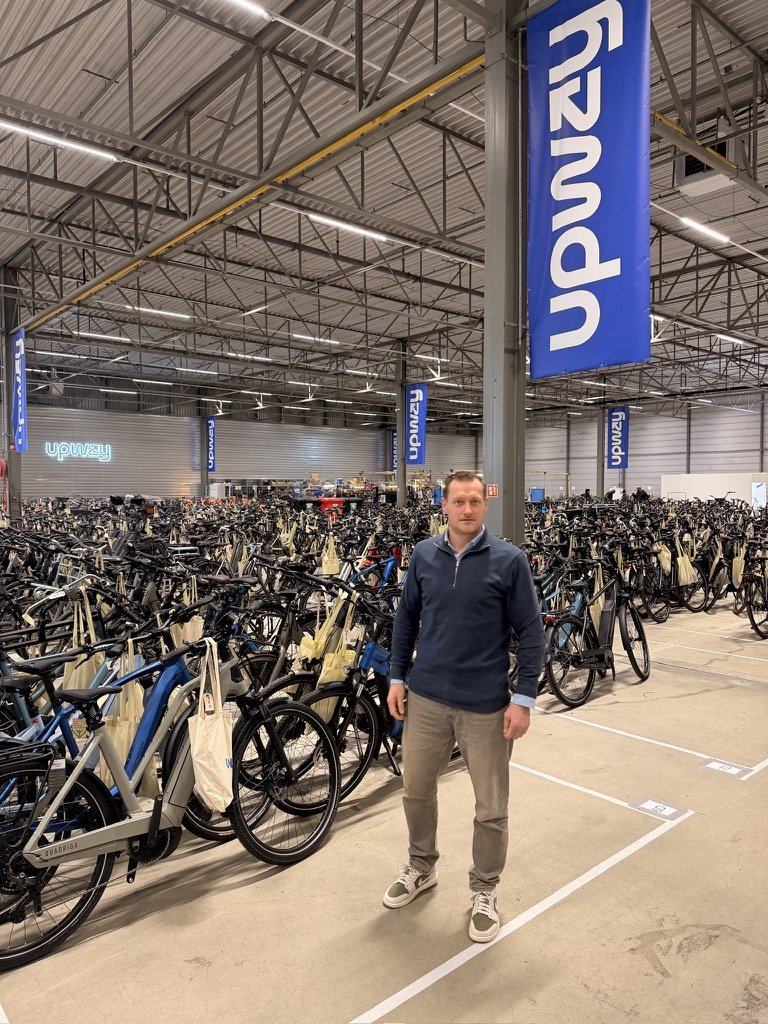
The Netherlands is the cycling nation of the world. But the days when we could cash in on that simply by selling lots of bikes are over. Sales of new bikes fell from just over 1 million in 2020 to around 800,000 in 2025. The new report Nederland als Fietsland by the Netherlands Enterprise Agency (RVO) points in another direction: the value lies in complete systems. In my work I see every day how such a system works in practice, and above all what it takes.
What the RVO says: think in systems
The report advises the Netherlands to position itself as a supplier of complete cycling systems, not individual products. The numbers show why. The sector’s production value grew from €1.9 billion in 2015 to €3.1 billion in 2024, but remains below the 2022 peak of €3.3 billion. The fastest-growing part is not the bike itself but its use: shared bikes, leasing and rental grew from around €10 million to €140 million in production value.
The RVO explicitly names circularity as part of a strong industrial base towards 2030. It also warns that a good reputation does not automatically translate into orders.
What a system looks like: Upway in Amsterdam
To be clear: I work for Upway on a freelance basis. That is why I know it up close, but I use it here as an example, not as an advertisement.
In March 2026, Upway opened its first Dutch refurbishment centre in Amsterdam-Zuidoost, in a 10,000 m² hall. The centre started at around 70 bikes a day and aims to grow to 80,000 bikes a year within about two years. What matters is not those numbers, but how the chain fits together:
- Inflow. Used e-bikes come in from brands, rental companies, retailers and consumers.
- Workshop. Mechanics inspect and refurbish the bikes so they are ready for sale again.
- Outflow. The bikes go back onto the market, since April 2026 also through Lease a Bike as business lease bikes.
From purchasing and refurbishment to leasing to a new user: it is all one system. A bike therefore does not last one life, but several.
The lesson: you cannot build a system alone
What strikes me most: no single party can run such a system alone. Without brands and dealers supplying bikes, there is no inflow. Without lease companies and retailers, there is no outflow. And without good mechanics, there is nothing to sell.
That is exactly where the Netherlands is strong. We have a dense dealer network, a mature lease market and brands with a long history. What is often missing is the willingness to connect those links, with agreements that make everyone better off. A truly good solution is a win-win for everyone involved. With systems, that is not a slogan but a precondition.
What this means for your business
- Bicycle manufacturers. A bike that comes back after three years can generate value again. Think about take-back, long-term parts and a design that is easy to refurbish. Whoever ignores the second life of their bikes leaves that market to others.
- Dealers and retailers. Your workshop is the link every system needs. Trade-in, refurbishment and maintenance of used e-bikes can become an extra source of income, provided the agreements on price, warranty and volume are right.
- Lease companies and fleet managers. Refurbished bikes lower the entry price of a lease scheme. That can help reach the large group of employees who do not use their bike scheme today. And you organise the return flow at the end of the contract yourself.
- Everyone. Look at your own place in the chain and decide which partners you need to deliver more value together than alone.
From cycling nation to system nation
We can do more than make good bikes. We can organise the chain. That is the opportunity for the Netherlands as a cycling nation, and for every company willing to look beyond its own product.
Want to know what role your company can play in a circular cycling system, or looking for the right partners to build one together? The Great Ride helps with strategy, business model and access to a network across the whole chain. Get in touch with Johannes for a no-obligation conversation.
Sources
- Nederland als Fietsland (RVO, October 2026, Dutch)
- Upway opent eerste Nederlandse locatie in Amsterdam (NieuwsFiets, Dutch)
- Upway en Lease a Bike starten samenwerking rond refurbished e-bikes (Tweewieler, Dutch)
Johannes de Bruin helps companies in the cycling industry grow through The Great Ride, with strategic advice, project management and partnerships. More about me